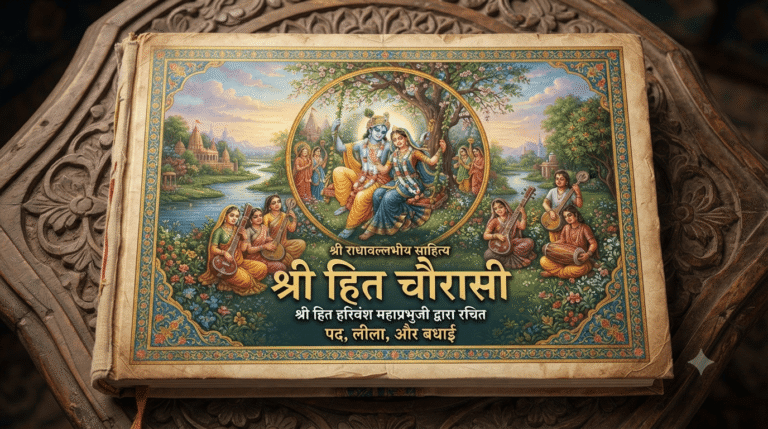
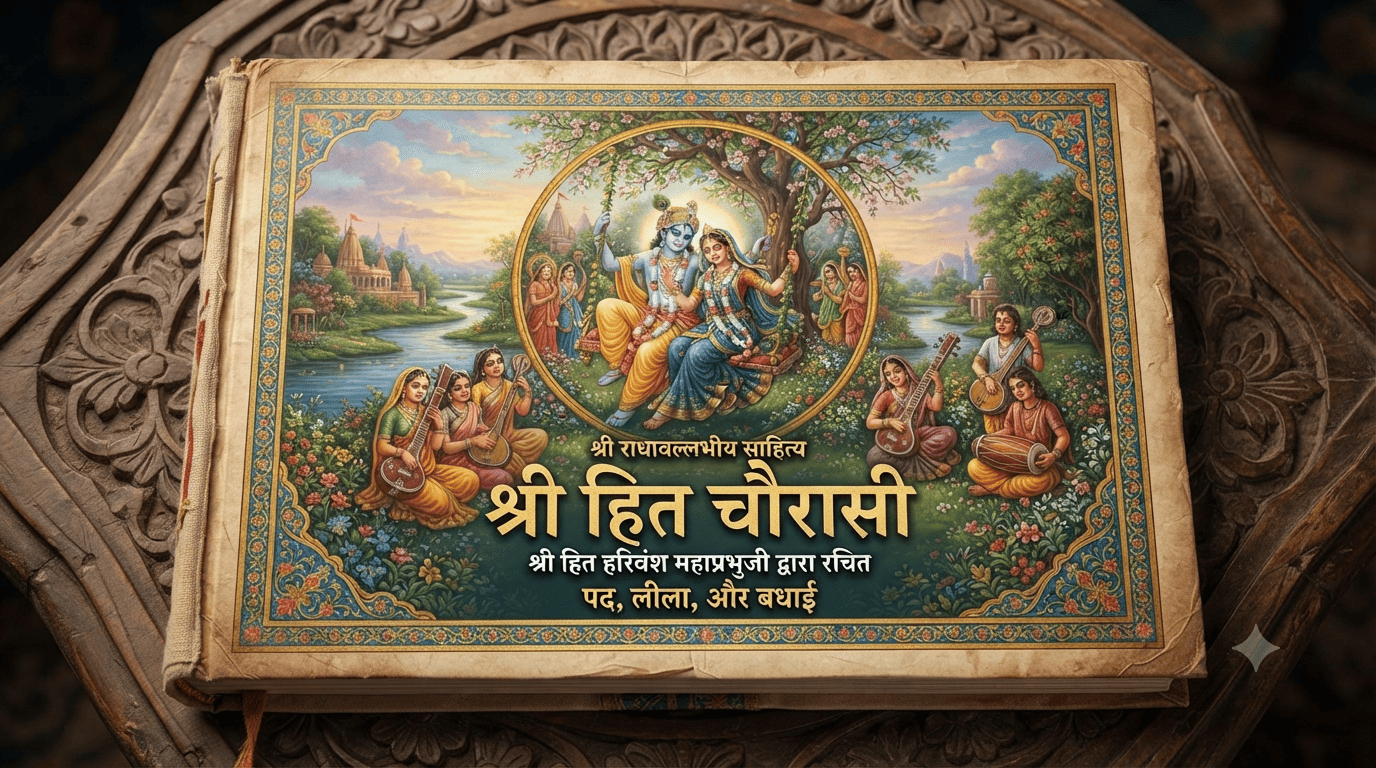
Mangalacharan of Shri Hit Chaurasi – English Translation
Mangalacharan
निगम अगोचर बात कहा कहौं अतिहि अनौखी।
Nigama agochar bāt kahā kahaun atihi anaukhī
उभय मीत की प्रीति-रीति चोखी ते चोखी॥
Ubhaya mīta kī prīti-rīti chokhī te chokhī
वृन्दावन छबि देखि-देखि, हुलसत हुलसावत।
Vrindāvana chhabi dekhi-dekhi, hulasata hulasāvata
जल-तरंगवत् गौर-श्याम विलसत विलसावत॥
ala-tarangavat gaura-shyāma vilasata vilasāvata
ललितादिक निज सहचरी, निरखि निरखि बलि जात नित।
Lalitādika nija sahacharī, nirakhi nirakhi bali jāta nita
चौरासी हित पद कहे, चतुरन कौ यह परम वित॥
Chaurāsī hita pada kahe, chaturana kau yaha parama vita
Line-by-Line Meaning & Context
-
“निगम अगोचर बात कहा कहौं अतिहि अनौखी।” (Nigama agochar bāt kahā kahaun atihi anaukhī) — Nigama refers to the Vedas. The poet wonders how to put into words a spiritual reality so unique and transcendent that even Vedic scriptures cannot fully perceive or grasp it.
-
“उभय मीत की प्रीति-रीति चोखी ते चोखी॥” (Ubhaya mīta kī prīti-rīti chokhī te chokhī) — Ubhaya mīta means the two friends/lovers (Shri Radha and Shri Krishna). Their bond (prīti-rīti) is the highest, most refined, and purest form of love (chokhī te chokhī).
-
“वृन्दावन छबि देखि-देखि, हुलसत हुलसावत।” (Vrindāvana chhabi dekhi-dekhi, hulasata hulasāvata) — Looking at the splendor of Vrindavan, they feel ecstatic (hulasata) and inspire ecstasy in one another (hulasāvata).
-
“जल-तरंगवत् गौर-श्याम विलसत विलसावत॥” (Jala-tarangavat gaura-shyāma vilasata vilasāvata) — Just as water and its waves are inseparable and move in harmony, Gaura (fair/golden Radha) and Shyama (dark Krishna) engage in divine play (vilasa), delighting and being delighted by each other.
-
“ललितादिक निज सहचरी, निरखि निरखि बलि जात नित।” (Lalitādika nija sahacharī, nirakhi nirakhi bali jāta nita) — Lalita and the other sahacharis (intimate maidservants/companions) constantly watch this divine play and sacrifice themselves in devotion (bali jāna—an expression of overwhelming adoration).
-
“चौरासी हित पद कहे, चतुरन कौ यह परम वित॥” (Chaurāsī hita pada kahe, chaturana kau yaha parama vita) — This is the concluding signature couplet of the Hit Chaurasi. Shri Hit Harivansh states that he has composed these 84 verses (chaurāsī pada), which serve as the ultimate spiritual wealth (parama vita) for chaturana—those who are spiritually wise and sensitive to the subtleties of ras (divine aesthetic bliss).
English Translation
How can I describe this extraordinary truth, which remains unseen and beyond the reach of even the Vedas? The way of love between these two divine beloveds (Radha and Krishna) is the purest of the pure.
Gazing endlessly at the beauty of Vrindavan, they rejoice and fill each other with bliss; Like waves upon water, the golden-complexioned (Radha) and the dark-hued (Krishna) sport together in mutual delight.
Lalita and their intimate companions behold this sight and surrender themselves in adoration every moment. Hit (Harivansh) has sung these eighty-four verses—this is the supreme treasure for the discerning connoisseurs of divine love.