Summary of Chapter 1 of the Bhagavad Gita
The Bhagavad Gita is a 700-verse Hindu scripture which is a part of the Indian epic Mahabharata. The beauty of this profound text is that it is a dialogue between Prince Arjuna and Lord Krishna, his charioteer.
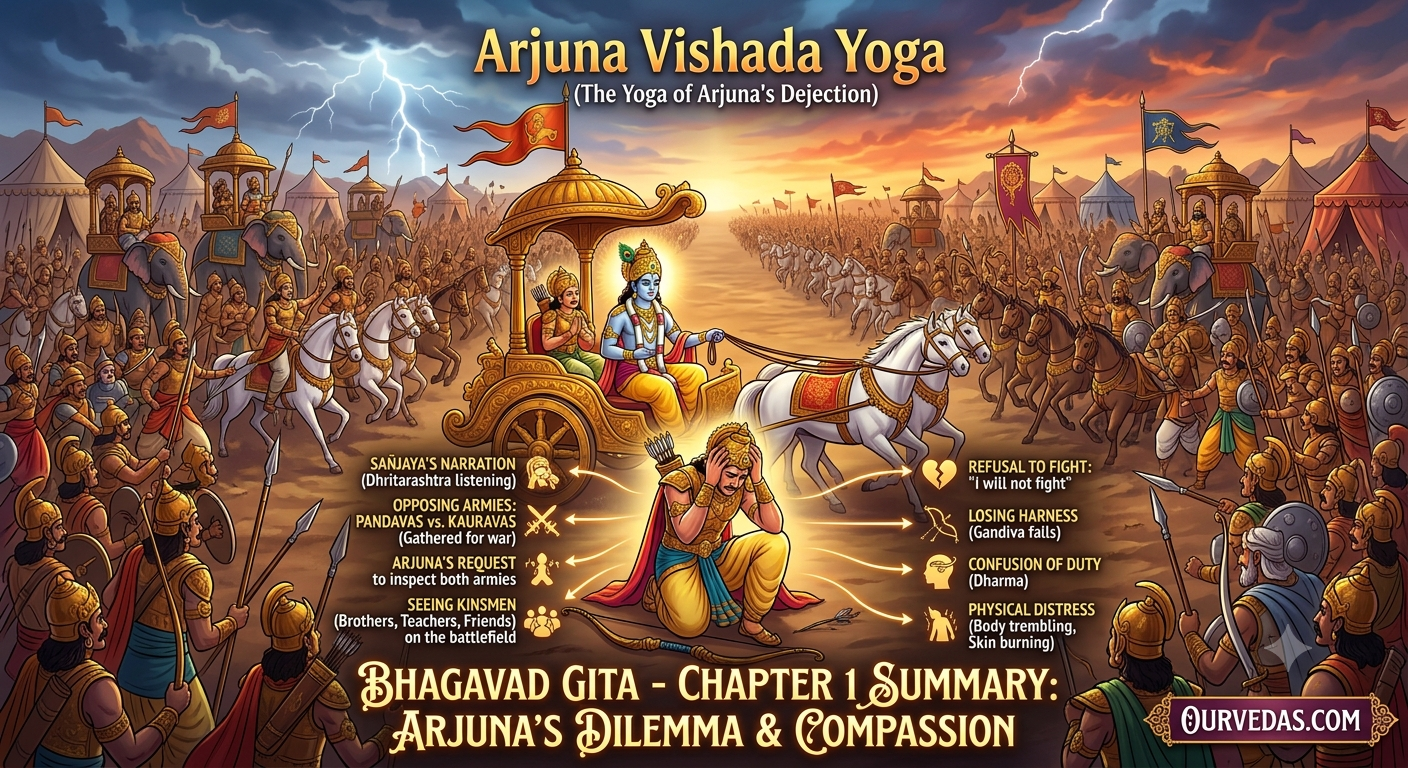
Chapter 1, “The Despondency of Arjuna,” lays the very basic foundation for the philosophical lessons that follow in this sacred text. This chapter shows the confusions of Arjuna on the battlefield of Kurukshetra after looking at his kin fighting against him. This lays the foundation for the in-depth dialogue about duty, righteousness, and the nature of the self.
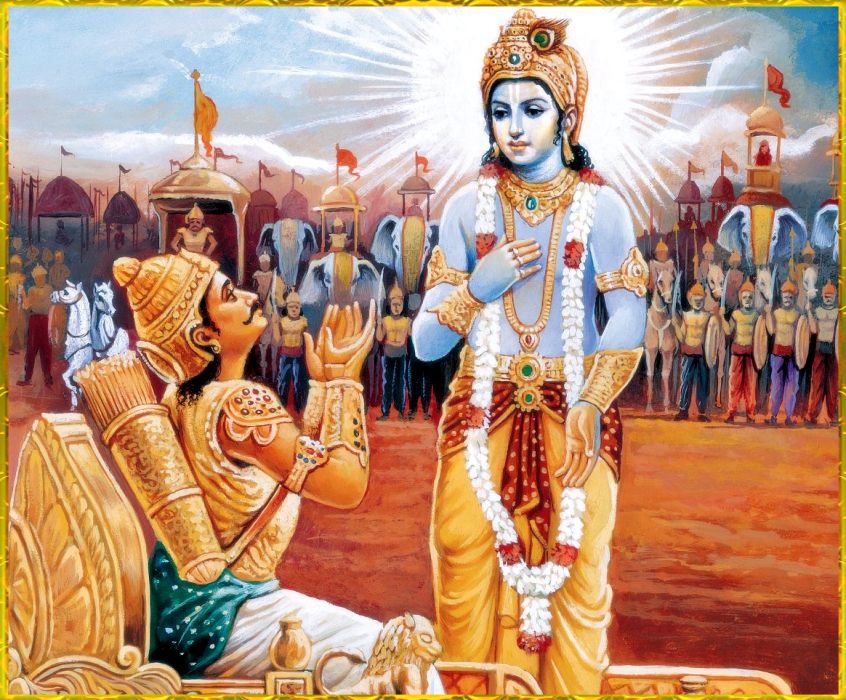
Setting the Scene
The chapter begins with blowing conch shells as the two armies assemble on the battlefield to fight. Arjuna, one of the Pandavas’ greatest warriors, requests Lord Krishna to place their chariot in the middle so he may see who has assembled for combat. Krishna does the same and moved the chariot in between two armies.
Arjuna’s eyes wander over the enemy army, and saw his family, professors, and friends, all of them had assembled to fight against him.
The Emotional Turmoil
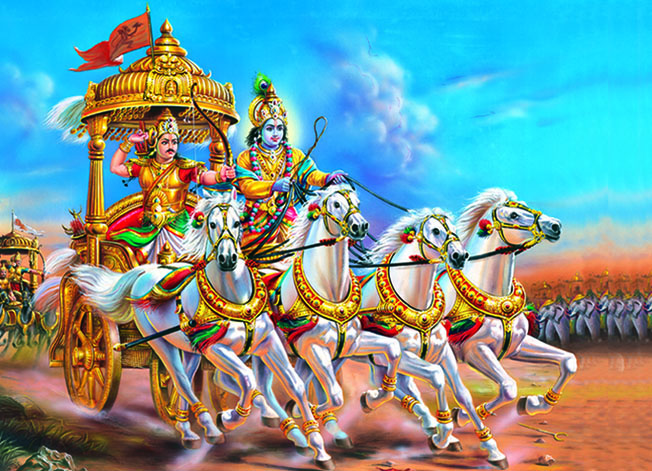
When Arjuna sees the fighters in the opposing camp, he is filled with grief and compassion. Seeing his loved ones makes his heart sink. He faces a grave moral conundrum as he must choose between upholding familial ties and showing dignity to people he loves and fulfilling his duty as a warrior (Kshatriya).
Arjuna’s thoughts shift to the consequences of the battle. He also considers the death and devastation that will result from the war, which makes him despair. He also thinks of the family and societal consequences, wondering whether killing his relatives for power and wealth is right.
The Crisis of Conscience
As his desperation grows, Arjuna declares he will not fight by setting down his bow and arrows. His internal struggle and incapacity to balance his obligations with his convictions are highlighted by this desperate act. In front of Lord Krishna, he laments and is confused, saying he cannot find value in the establishment of a kingdom founded on his own family’s blood.
This is also a pivotal moment for Arjuna and the story of the Bhagavad Gita since it poses important issues on morality, duty (dharma), and the complexity of human emotions. The lessons Krishna would impart—lessons that emphasize the need of understanding one’s responsibility during ethical and emotional crises—are made possible by Arjuna’s failure.
Conclusion
The first chapter of the Bhagavad Gita is a deep introduction to the subject matter and problems that will be discussed later. Arjuna’s conflict within himself mirrors the human condition of struggling with difficult feelings and moral choices. This chapter sets the tone for the importance of understanding our responsibilities and the consequences of our actions, setting up the reader for the following profound dialogue.
FAQs
Who did Arjuna see on the battlefield?
On the field of Kurukshetra, Arjuna saw many of his relatives, teachers, and friends gathered in the enemy’s army. These included close family members like cousins, uncles, and respected mentors, which deeply troubled him. Seeing all these faces within his army filled him with sorrow and sympathy, giving rise to his ethical dilemma of fighting against people he cared about. This awareness increased his emotional struggle and made him unwilling to fight.